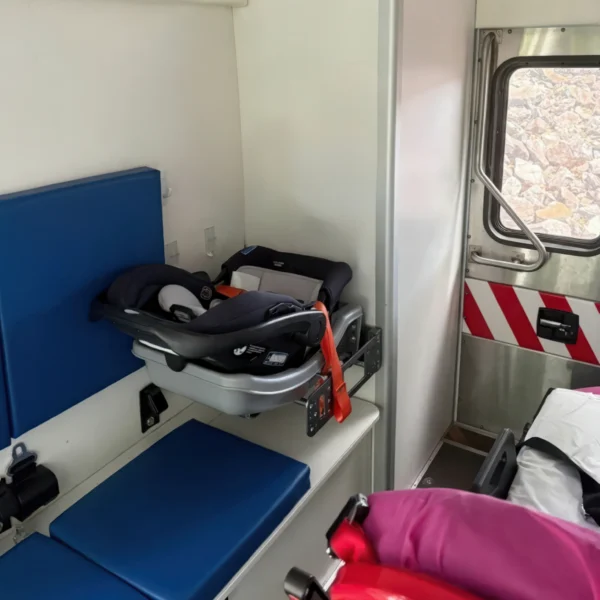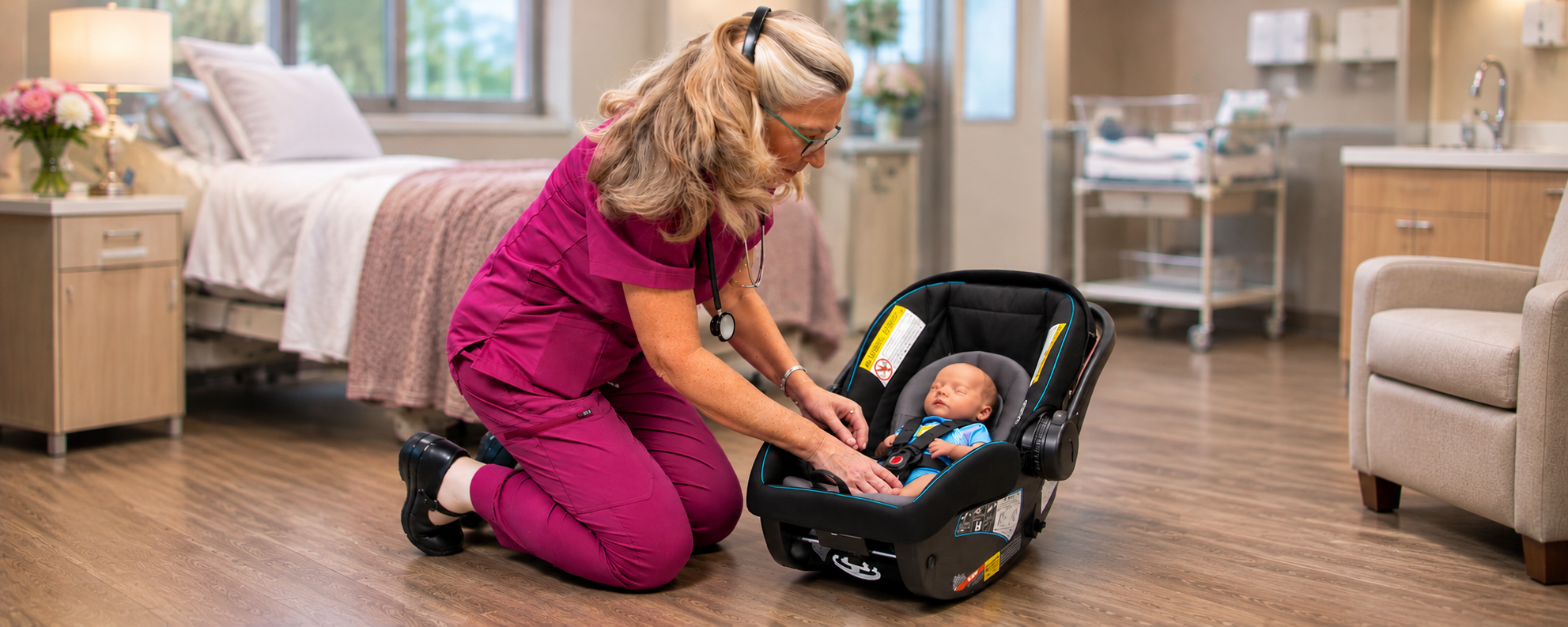
For parents of newborns, bringing their baby home is a highly anticipated milestone. But for premature and medically vulnerable infants, an additional screening may be necessary before discharge: the car seat challenge test.
This screening helps healthcare teams evaluate how an infant tolerates sitting in a semi-reclined car seat while their breathing, oxygen saturation, and heart rate are monitored.
While the car seat challenge is a routine part of discharge procedures in many hospitals, failed tests can complicate discharge planning, extend hospital stays, and create additional problems for nursing teams and families.
Having dedicated equipment for car seat testing can help hospitals create a more consistent, organized, and efficient process.
What Is the Car Seat Challenge Test?
The car seat challenge test (or car seat tolerance screening), is commonly performed on infants before discharge. During the screening, an infant is placed in their car seat at the appropriate recline angle while healthcare professionals monitor for:
- Decreases in oxygen saturation
- Abnormally slow heart rate (bradycardia)
- Episodes of apnea or interrupted breathing
- Other signs of difficulty tolerating the seated position
Testing can vary in length, depending on hospital protocols.
How Common Is It for Newborns to Fail the Car Seat Challenge?
Approximately 9% of premature and other at-risk infants fail their initial car seat challenge test, according to a systematic review and meta-analysis published in JAMA Network Open.
The research, which reviewed 21 studies, also found that approximately 24% of infants who failed their initial screening failed a subsequent test, typically performed 24 to 72 hours later.
These findings highlight how frequently car seat challenge failures can affect the discharge process for infants who require screening. Failure rates vary among hospitals and patient populations, with individual studies reporting different results based on infant characteristics and testing protocols.
How Failed Car Seat Challenges Affect Hospital Stays
When a newborn fails the car seat challenge, the healthcare team must determine the appropriate next steps. Depending on the infant’s condition and hospital policies, these may include additional observation, further evaluation, repeat testing, or consideration of an alternative transportation arrangement.
These additional steps can delay discharge. Hear from Julie Shaw, Nursing Director Maternal Child Services, about how this problem impacted her team and patient families.
A study published in the American Academy of Pediatrics journal Hospital Pediatrics, titled The Association Between Routine Car Seat Screening and Subsequent Health Care Utilization, examined more than 5,200 newborns and found that infants who failed car seat tolerance screening had longer hospital stays than unscreened infants.
After adjustment, the difference was approximately:
- 16 additional hours overall for newborns who failed screening
- 71 additional hours for infants screened in the NICU or another inpatient unit
The JAMA Network Open review also estimated that, if approximately 300,000 premature infants underwent screening annually in the United States, initial failures could potentially delay discharge for more than 30,000 infants by at least 12 to 24 hours. These estimates illustrate the potential operational impact of failed screenings.
For hospitals, additional inpatient days can mean greater demands on nursing resources, discharge coordination, and bed availability. For families, an unexpected delay may create emotional stress and require changes to transportation, work schedules, and childcare arrangements.
“It took my son a week to pass the car seat tolerance test (1 test every 24 hours). I kept asking why it was on the floor at an angle not like in the car. It blew my mind that they had no answer.” – Story Shared by a Mom
Why Dedicated Car Seat Challenge Testing Equipment Matters
Because car seat challenge testing is already part of the discharge workflow at many hospitals, the equipment used to perform it deserves consideration. Without a dedicated testing station, nursing teams may place infant car seats on floors, chairs, beds, tables, or countertops.
These improvised arrangements can create challenges involving positioning, accessibility, cleanliness, and workflow consistency. Car seat hospital testing equipment provides a purpose-built alternative that supports the screening process.
Consistent Car Seat Positioning
Proper positioning is essential during the car seat challenge test. The infant carrier must be secured and positioned at the appropriate recline angle according to the seat manufacturer’s instructions and hospital protocols. A car seat testing station with an adjustable incline and angle verification can help staff establish a consistent setup.
Improved Nursing Workflow
NICU and labor and delivery nurses manage numerous tasks during the discharge process.
Dedicated testing equipment can support staff by:
- Reducing time spent preparing improvised testing locations
- Keeping infant carriers at an accessible working height
- Making testing stations easier to move between rooms
- Supporting more consistent testing procedures
- Reducing the need for nurses to bend or kneel on the floor

Cleaner, More Organized Testing Areas
Placing infant carriers on floors or other multipurpose surfaces can complicate cleaning procedures and organization.
A designated testing station helps keep carriers off these surfaces and provides an equipment platform designed for hospital environments.
A Practical Solution for NICU and Labor and Delivery Teams
The Car Seat Tester from Patients First Products was developed to address common challenges associated with infant car seat challenge testing.
Its features include:
- Universal carrier docking: Accommodates standard infant carriers.
- Adjustable testing angle: Helps staff position the infant carrier at the appropriate incline and verify the appropriate angle through the viewing window on the side of the unit.
- Portable design: Makes it easy to move equipment between patient rooms and testing areas.
- Ergonomic working height: Reduces the need for nurses to work on the floor or bend over improvised surfaces.
- Easy-to-clean construction: Supports routine hospital cleaning procedures.
The Car Seat Tester does not replace physiological monitoring, clinical judgment, or established screening protocols. Instead, it provides a dedicated platform designed to make the testing process easier to manage.
Supporting a More Efficient Newborn Discharge Process
Car seat challenge failures are not uncommon among the infants who require screening. For some, additional observation and repeat testing can mean remaining hospitalized longer than originally anticipated.
While dedicated testing equipment cannot prevent medically necessary discharge delays or guarantee improved screening outcomes, it can help nursing teams maintain a more consistent, organized testing environment.
For hospitals looking to improve infant discharge workflows, dedicated car seat challenge testing equipment is a practical investment in nursing efficiency, equipment organization, and the patient experience.
Learn more about the Patients First Products Car Seat Tester or contact our team to discuss your facility’s needs.